

Prepared for Vallourec
This page was written for one conversation and is not published. The password is in the covering mail. If you do not have it, write to alexander.schlemminger@quantolux.de and you will have it the same day.
Clean steel starts in the slag
Slag analysis in 20 seconds, next to the furnace. What that changes for inclusion control in the ladle, and for process stability in the electric arc furnace. And what it does not change.
The honest part first
The QLX9 does not measure inclusions. It measures the slag that produces them, and the slag that takes them out again.
An inclusion rating from the metallographic lab describes a heat that is already finished. It is a verdict. The slag describes a heat that is still running, and it does so while the ladle is still under the electrodes. That is the whole difference, and it is why this page is about slag chemistry rather than about cleanliness ratings.
Two things follow from that. Anything on this page that concerns inclusions is an argument about cause, not about detection. And every number we quote is a slag number, measured on a broken sample that stays available and can be measured again next week.
The third thing belongs here rather than in the small print at the bottom. Everything we say about Jeceaba is an estimate. The process route, the annual tonnage, the cost assumptions, all of it comes from publicly available sources and from our experience at comparable plants. None of it came from you. So please read this page as a set of questions with our best guess already filled in, and correct whatever is wrong. We would rather rebuild the argument on your figures than defend ours.
Steps 01 and 02 are slag chemistry and can be measured in seconds. Step 04 is a rejection note. The distance between them, in a seamless tube plant, is measured in weeks.
Ladle furnace: five points where the slag decides the inclusion picture
None of these are new to a metallurgist. The question is not whether they matter. It is whether you can see them while the ladle is still open.
1. Slag carry over from the furnace
FeO and MnO carried into the ladle are the largest single source of reoxidation. They hand back the oxygen that the aluminium has just removed, and the product of that reaction is exactly the alumina that later becomes an indication. The usual working target, FeO plus MnO below roughly one percent in the ladle slag, is a number you can either measure in 20 seconds or wait 15 minutes for.
2. The top slag is the sink
Alumina leaves the steel by being absorbed. That works only while the slag is liquid and basic enough to take it, which is CaO, Al2O3, SiO2 and MgO acting together, and it works only until the slag is loaded. A rising Al2O3 reading across the treatment is absorption capacity being consumed, expressed as a number rather than as a feeling.
3. Sulphur and cleanliness run on one slag
High basicity and low FeO. The slag that desulphurises is the same slag that keeps the steel clean, and a slag that fails at one usually fails at both. For sour service that is not a side topic, it is the specification. Sulphur sits inside the ladle furnace calibration, so the desulphurisation itself is visible, not only its precondition.
4. MgO cuts both ways
Too little, and the slag dissolves the lining it is sitting in. Too much, and magnesia comes back as MgO·Al2O3 spinel, which nobody wants in a tube for sour service. MgO happens to be the element where the reproducibility gap between Laser-OES and a pressed pellet is widest, so it is also the element where a faster method is not only faster.
5. Fluorine, the element most methods quietly leave out
Fluorspar buys the fluidity that makes absorption work in the first place, and it costs lining life and attracts attention from the environmental side. So the dosing is a genuine optimisation, not a habit. The QLX9 can be supplied with fluorine determination through an additional optic. X ray fluorescence has a hard time with fluorine, and that is not a sales argument, it is penetration depth. If fluorspar dosing at Jeceaba is currently set by experience rather than by measurement, this is the point where a number changes something on the first day.
Electric arc furnace: stability and process monitoring
Jeceaba runs a Consteel furnace with a hot metal share alongside scrap. That is an advantage for cost and for the carbon balance, and it is a complication for the slag, because the silicon and phosphorus arriving with the hot metal set both the slag volume and the lime demand, and they are not constant from heat to heat.
A fixed flux recipe is right on average and wrong on the individual heat. The wider the input mix moves, the larger the safety margin the operator has to add, and safety margin is the expensive part.
FeO is pulled in two directions at once. Dephosphorisation wants oxygen potential, yield wants iron in the steel rather than in the slag pot. The working window between the two is not a constant. It moves with basicity, with temperature and with the alumina load. Which means it has to be located per heat, not looked up.
Foaming fails twice. Once at low FeO, when the solid particles that carry the foam disappear, and once at high FeO, when the slag becomes too liquid to hold them. Only the middle region works, and the middle region moves.
The scatter matters more than the average. Most melt shops can name an average FeO. Very few can name the standard deviation across the last fifty heats, and that figure is the better description of process control. An operation running 20 percent with wide scatter is in worse control than one running 22 percent with narrow scatter, because the bad heats come out of the scatter, not out of the mean. In a seamless tube plant a bad heat does not stay in the melt shop. It travels to the piercing mill and reports back at ultrasonic inspection.
Time: what the comparison with XRF is actually about
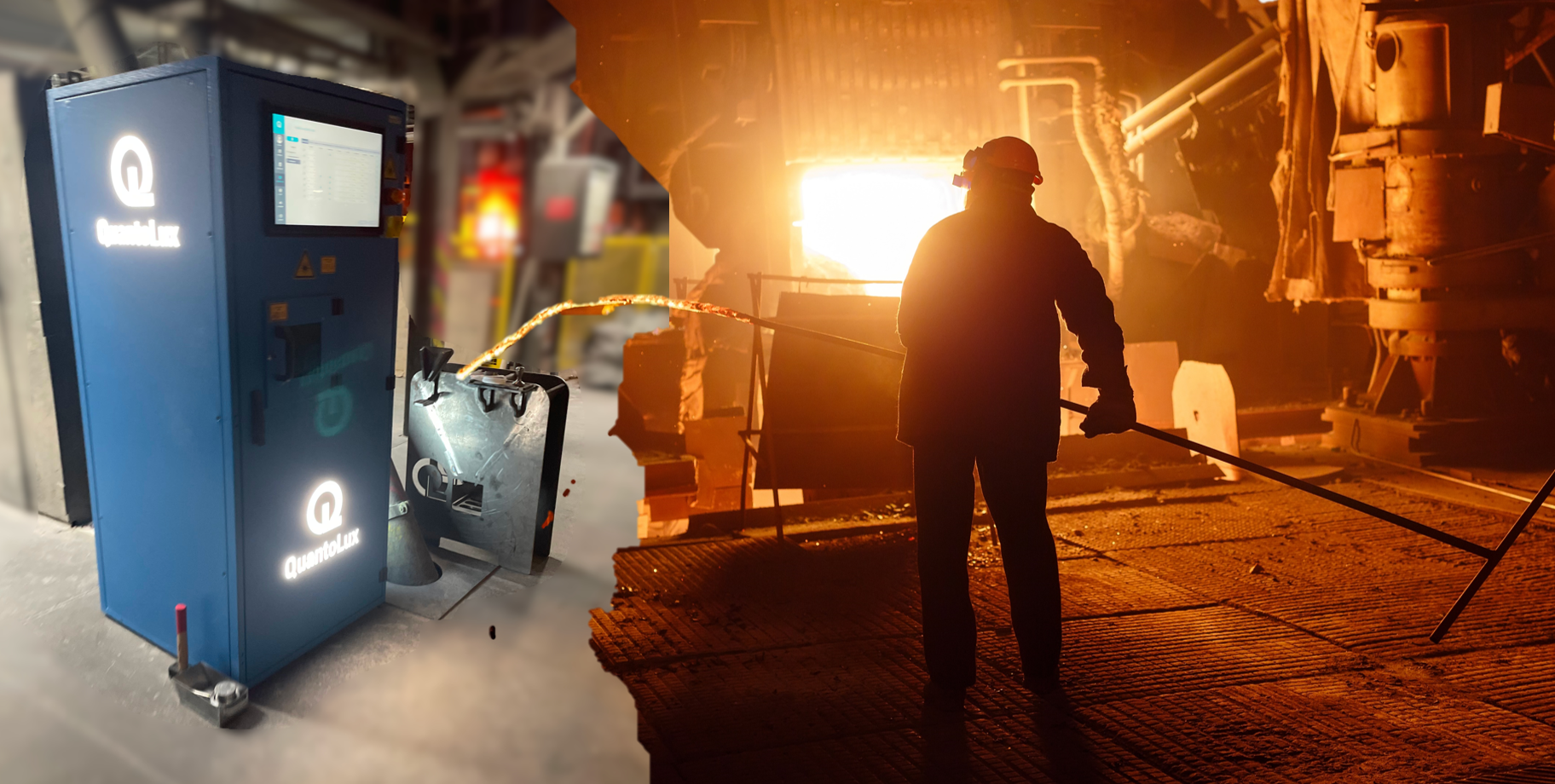
The point is not a faster analysis. The point is a result that can still change something. A ladle treatment runs 30 to 45 minutes. Everything that arrives after it is a record, not a decision.
Where the error actually sits
More than half of the analytical error in conventional slag analysis comes from sample preparation, not from the instrument. Slag is heterogeneous, so a pressed pellet has to be made homogeneous by hand, and every step of that, crushing, de metallising, milling, splitting, pressing, adds its own contribution and its own opportunity for cross contamination.
Laser-OES takes the opposite route. Instead of homogenising the material, it homogenises the data. Ten thousand single spectra are collected across a moving granular sample in 20 seconds and averaged. The method that skips the preparation ends up more representative, partly because it skips it.
| Typical standard deviation, absolute percent | Al2O3 | SiO2 | MgO |
|---|---|---|---|
| XRF, pressed pellet | 0.65 | 0.93 | no series |
| XRF, fused bead, the laboratory reference | 0.26 | 0.14 | no series |
| Laser-OES, QLX9, on unprepared granular slag | 0.32 | 0.20 | 0.10 |
Repeated measurement series across customer installations. These are typical values for orientation, not acceptance criteria. On MgO, the element that governs lining protection and spinel formation, Laser-OES comes out ahead of the pressed pellet and close to the fused bead, at a fraction of the preparation effort.
The second point concerns the light elements. Mg, Al, Si and F are the elements that decide the inclusion picture, and they are the same elements where XRF is weakest, because of low penetration depth and grain size effects on a pressed pellet. The overlap is not a coincidence, it is the reason this topic is worth a conversation.
The technology, in short
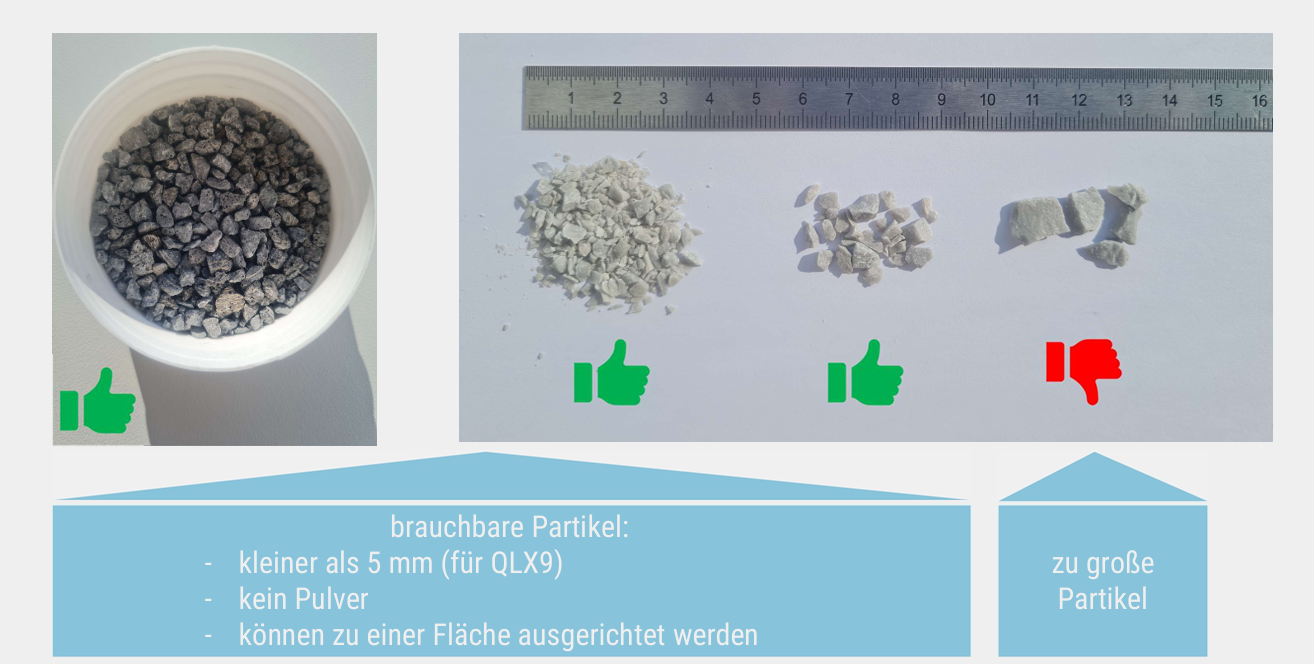
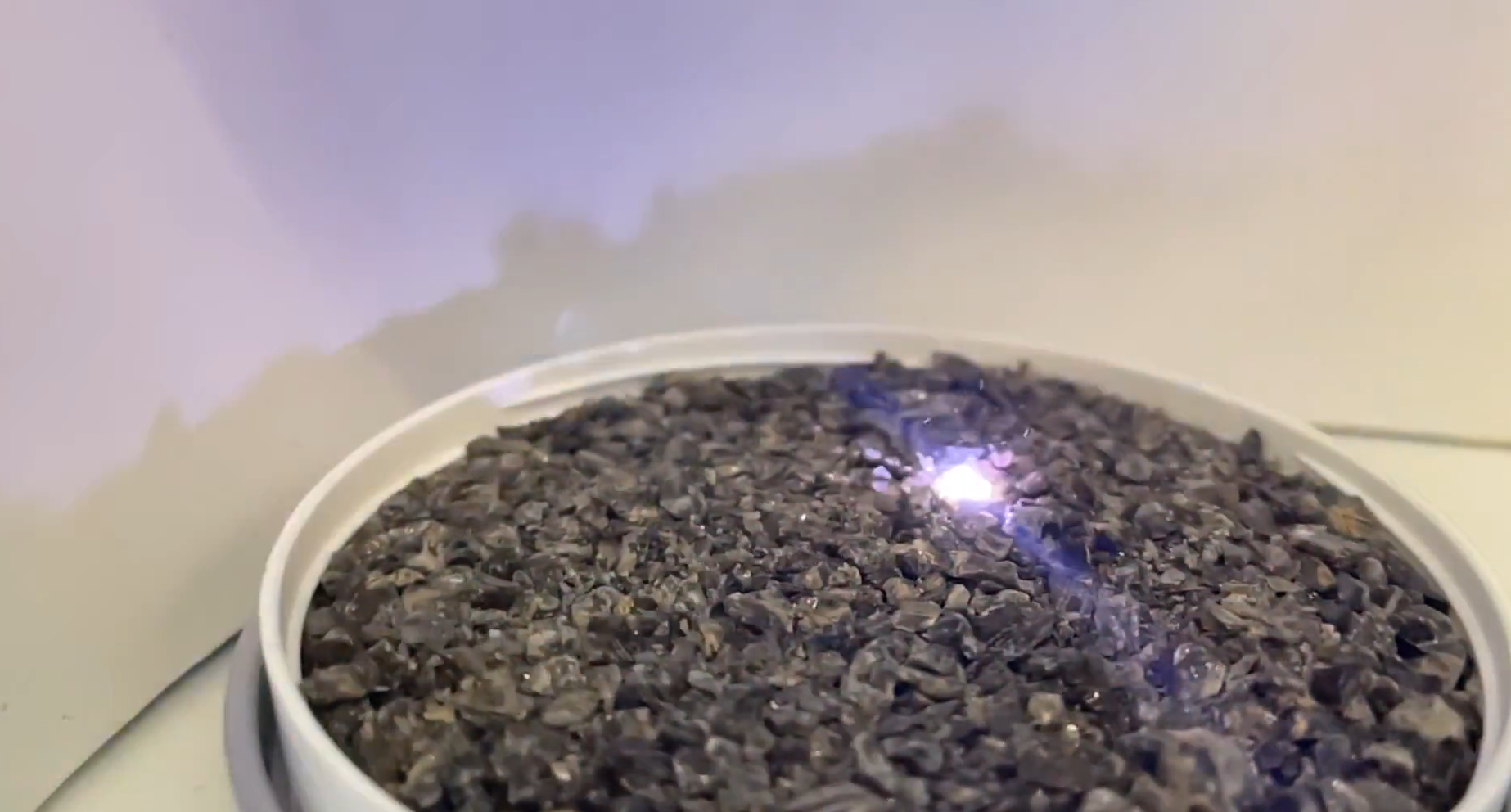
A pulsed laser fires up to a thousand times per second onto the broken, unprepared slag surface. Each pulse creates a micro plasma, and a spectrometer reads the light it emits. Around ten thousand single spectra are collected per analysis and evaluated together. In the academic literature the method is called LIBS, in industry we call it Laser-OES, and it is the same thing.
The optical design is patented and works with several objectives whose detection cones overlap in the plasma region. That is what allows this many data points in 20 seconds, and it is what gives every single result a statistical buffer that a handful of point measurements cannot provide. There is no Z axis and no distance measurement, because the instrument does exactly one job and the optics could be built around it. An axis that is not there cannot fail.
Ablated material per analysis is about 0.6 micrograms, so the sample survives. It goes back in the box and can be measured again in three months, which matters the day a result is questioned.
What the calibration is built on
The standard EAF and ladle furnace calibrations are not built for one plant and then stretched. They rest on fewer than 3,000 slag samples from fewer than 20 steel mills, and the set deliberately spans rebar producers, quality steel producers and stainless producers, including slags that are silicon killed, aluminium killed and titanium killed.
For Jeceaba the aluminium killed part of that set is the relevant one, because that is the slag chemistry that comes with an aluminium deoxidation practice and a high alumina load in the top slag. Inter element correction, automatic background correction and profiling are part of the method, not an add on. Check and standardisation samples ship with the instrument.
Every standard calibration can be adjusted to your reference values. That needs enough samples across a wide enough concentration range, which is the practical reason we ask for five to ten samples per slag type rather than two.
The software point that usually gets missed
QLX 4.0 has a formula editor. You define your own expressions on top of the measured concentrations, so the screen shows the numbers your practice is actually written in rather than a list of oxides that someone has to convert in their head.
For this page that means B2, B3, the CaO to Al2O3 ratio and the sum of FeO plus MnO can each be a field on the operator screen, updating with every measurement. Plus a drift monitor, two point standardisation, user profiles, a locked mode for fail safe operation and a guided workflow mode for the shift team.
Work modes are Analysis, PMI and Sort. Results can be accepted or rejected by logic rules, so a failed measurement reports itself instead of quietly entering the record.
The instrument
Two housings, one measuring principle. Which one fits depends only on where it is going to stand.
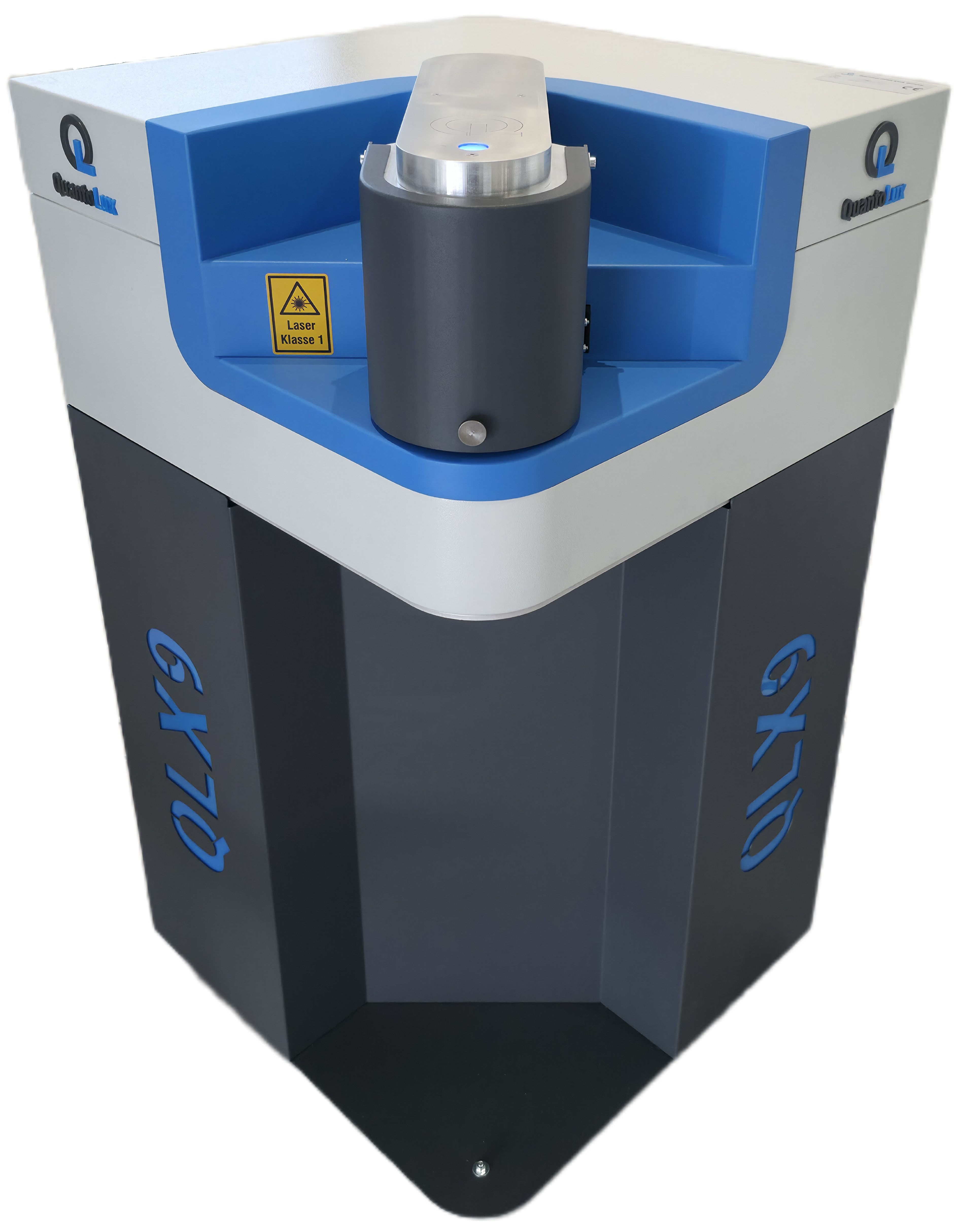
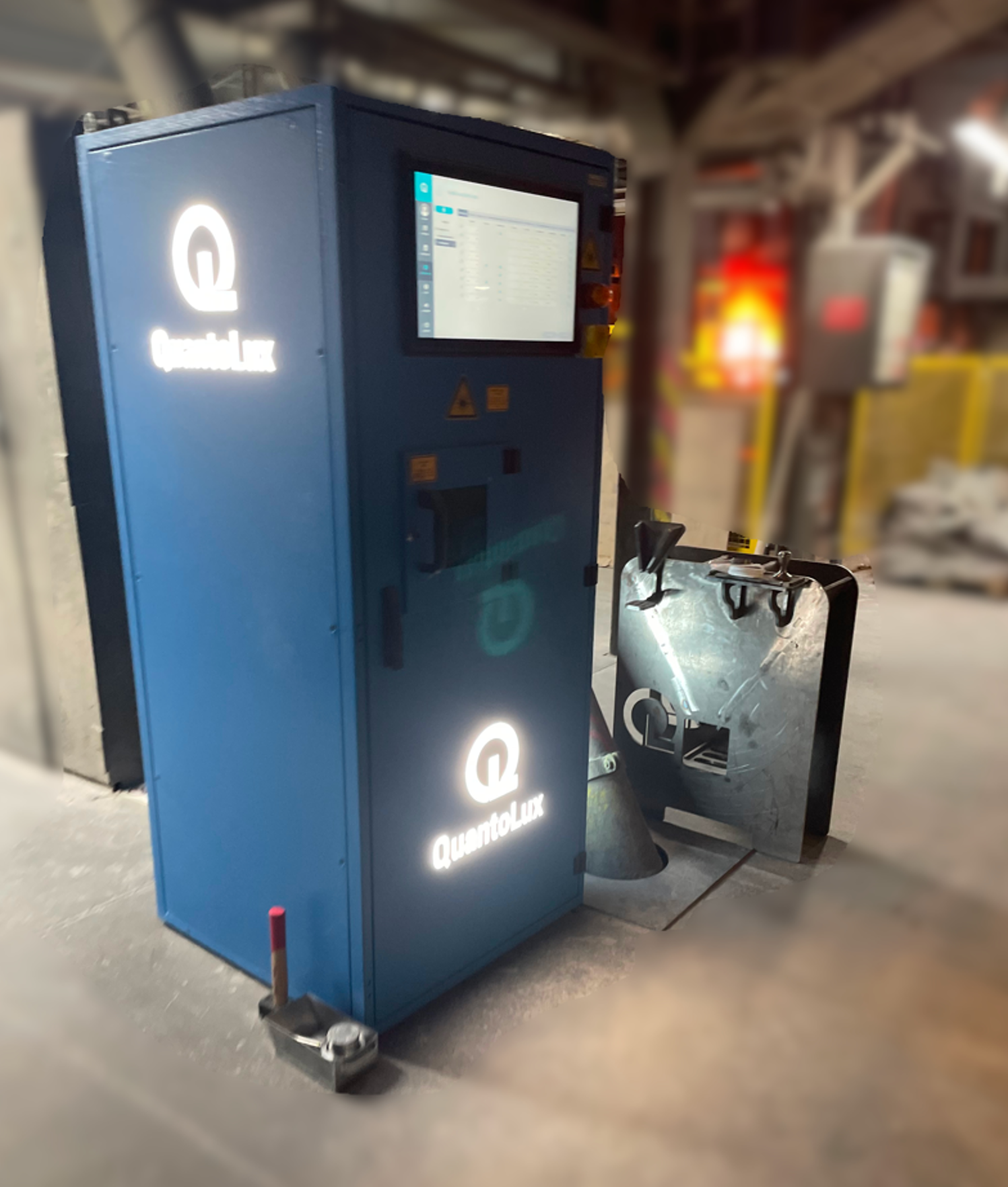
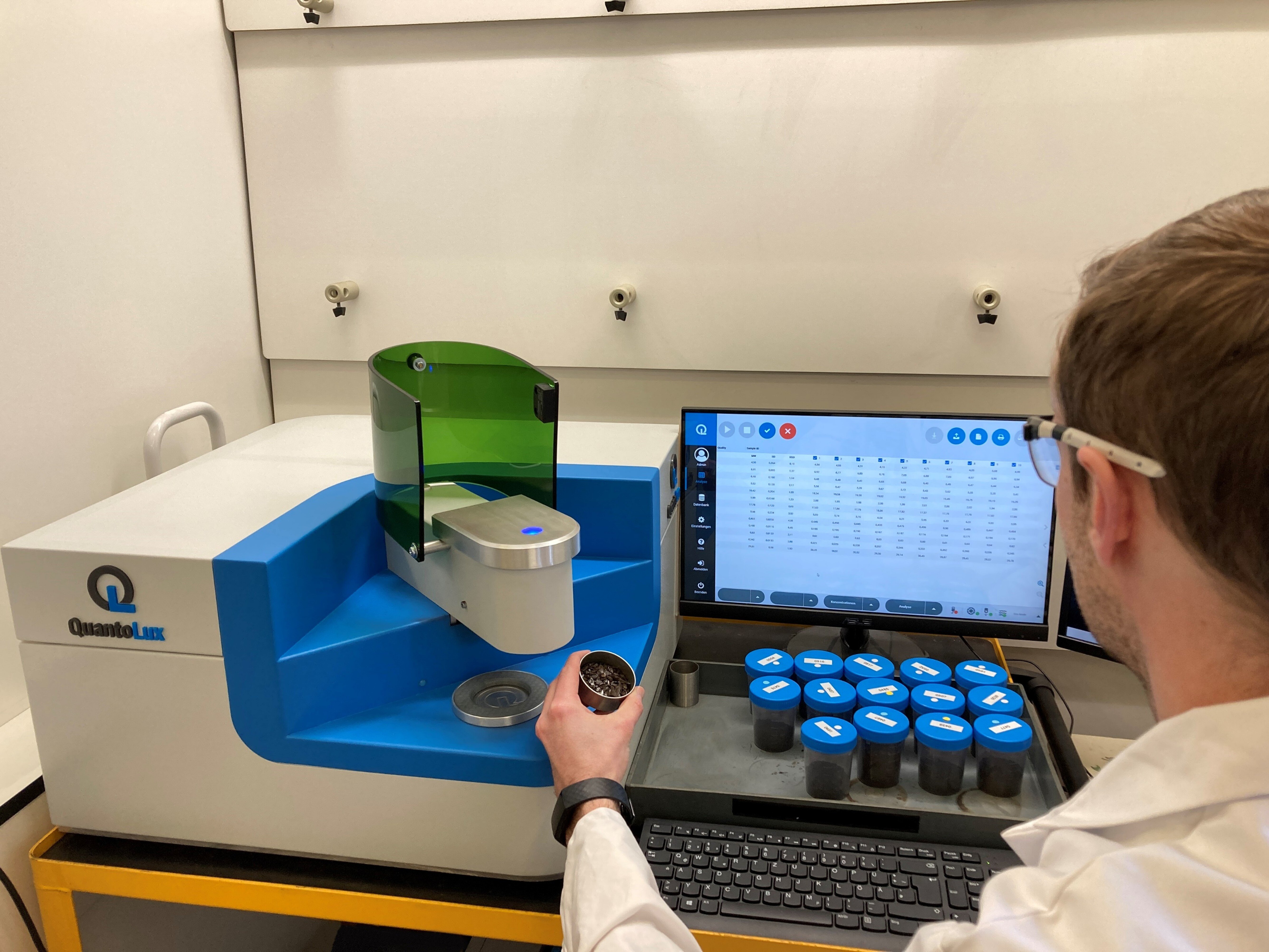
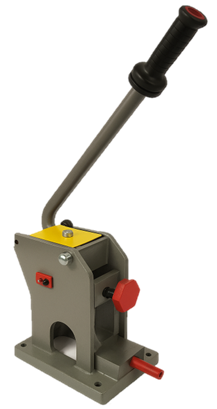
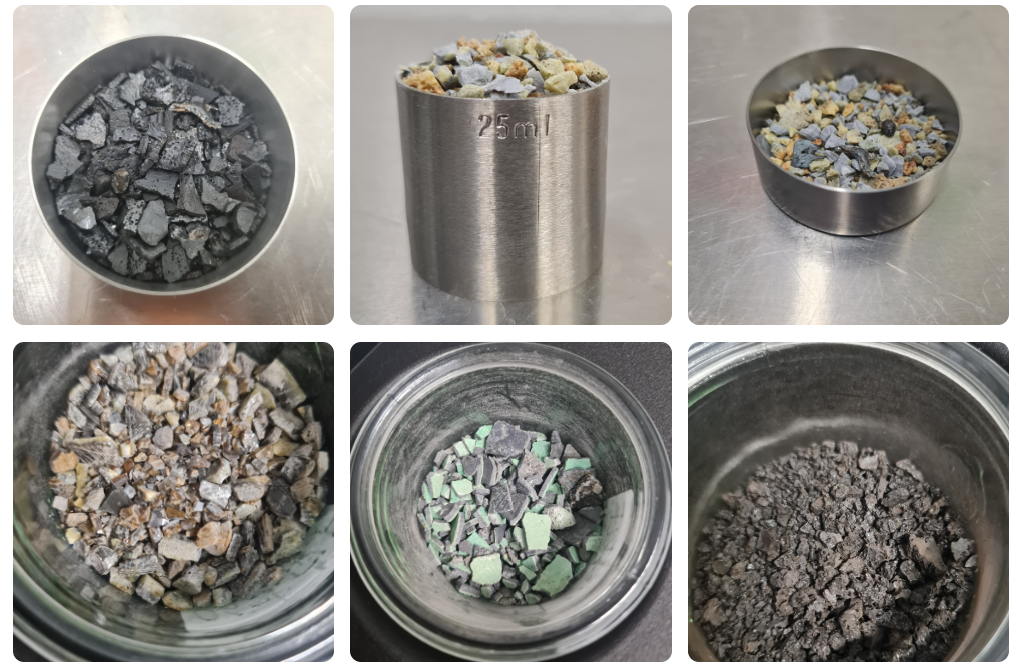
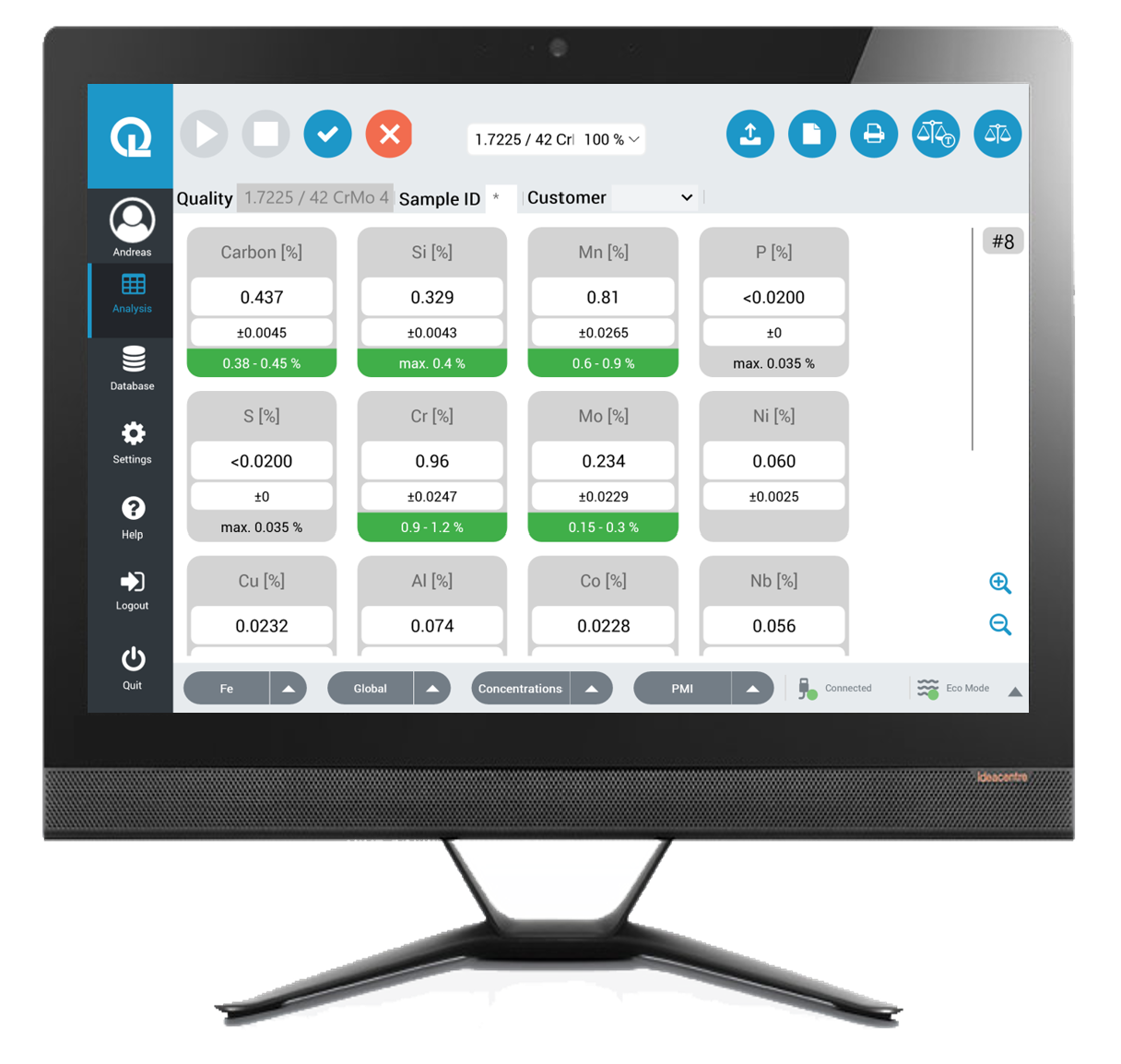
Ladle furnace calibration, the elements this page is about
The table above compared methods on an oxide basis, because that is how the published comparison was run. The datasheet works on an element basis, so here are the actual figures for the elements that carry the inclusion argument. Absolute standard deviation, at the concentration level where each element usually sits in a ladle slag.
| Element | Calibrated range, percent | Level | Typical SD, absolute |
|---|---|---|---|
| Al, the alumina load and the absorption capacity | 2 to 40 | 20 to 30 | 0.18 |
| Ca, the basicity numerator | 20 to 60 | 30 to 40 | 0.30 |
| Si, reoxidation and silicon pickup | 3 to 40 | 5 to 10 | 0.08 |
| Mg, lining protection and spinel risk | 2 to 15 | 5 to 10 | 0.08 |
| Fe, the carry over indicator | 0.1 to 12 | 0.5 to 1 | 0.03 |
| Mn, the second carry over indicator | 0.1 to 6 | 0.5 to 1 | 0.01 |
| S, desulphurisation | 0.5 to 5 | 0.5 to 1 | 0.10 |
| F, fluorspar dosing | 1 to 20 | 1 to 2 | 0.08 |
Values apply to granular, broken material up to 5 mm grain size. These are typical performance figures across the calibrated range, and the full table by concentration band is in the product information document. Fluorine requires the additional NIR optic. Ranges can be extended on request. Guaranteed figures are set separately from typical ones and are defined in the quotation, not here.
Read the FeO line carefully. Fe in a ladle slag is low by design, so a relative percentage on it flatters nobody and means little. What matters is the absolute figure. At around one percent Fe the typical standard deviation is 0.03 absolute, which is well inside what a decision about carry over needs. That is the honest way to state it, and it is the reason we quote absolute values on this element instead of a relative one.
Four videos, in the order that makes sense
Why the instrument exists, what a measurement looks like, how the sample gets there, and what changes when it has to stand next to the furnace.
What we calculated for Jeceaba, and what we deliberately left at zero
We ran our value model on 600,000 tonnes per year, an electric arc furnace and a ladle furnace. Every assumption is listed. Where we had no basis for a number, we entered zero rather than an estimate.
Before you read a single figure. Every input below is an estimate. We took the production route and the tonnage from publicly available information about Jeceaba, and the cost assumptions from comparable electric arc furnace operations we work with. Not one number in this table came from Vallourec, because we have not asked yet. Treat the whole thing as a proposal for a joint calculation rather than as a result. Correct the inputs and the outcome changes, which is exactly how it should work.
| Lever | Assumption used | USD / t steel |
|---|---|---|
| EAF, iron yield through FeO control | FeO from 33 to 31 percent, slag volume 11 percent, scrap at 350 USD/t | 0.593 |
| EAF, refractory life | plus 2 percent, on 7.50 USD/t refractory cost | 0.150 |
| LF, ladle life | 50 to 53 heats, on 3.50 USD/t refractory cost | 0.210 |
| EAF, electricity | no reduction assumed | 0.000 |
| EAF, electrodes through better foaming | no reduction assumed | 0.000 |
| EAF, tap to tap time | no reduction assumed | 0.000 |
| LF, electricity and treatment time | no reduction assumed | 0.000 |
| Steel cleanliness, rejects and downgrades | not calculated. See below, this is your number, not ours | 0.000 |
| Total | roughly 0.95 USD per tonne of steel | 571,740 USD / year |
Payback is about four months against an investment in the order of 200,000 USD, and that is with seven of the nine lines above sitting at zero. The FeO assumption is deliberately careful as well. Two percentage points is a modest improvement for a furnace that is currently steered without a slag value inside the heat.
Further assumptions: 330 operating days, electricity at 0.03 USD/kWh, EAF tap to tap 45 minutes, EAF electricity 450 kWh/t, LF electricity 30 kWh/t. The model is input driven. If any of these are wrong for Jeceaba, tell us and we will rerun it with your figures rather than defend ours.
Why the interesting line is empty
The reason you are reading this page is inclusions. That is also the one lever we cannot fill in, because it depends on how much product Jeceaba currently downgrades, reworks or scraps for cleanliness reasons, and on what a tonne of that product is worth to you. We know neither number. You know both.
The line we left empty. Over to you.
Four figures, all yours. Nothing is sent anywhere, the page calculates in your browser. If the result is large, it belongs in the business case. If it is small, you have saved yourself a meeting.
If you would rather not put these numbers into a web page, that is understandable. Write the four figures on a sheet in your own meeting and use the same arithmetic. The result belongs to you either way.
Who runs one, and on which process
Ten installations, on three continents, across BOF, electric arc furnace, ladle furnace and ferroalloys. All of them are open to a visit or a call on prior request. The oldest has been in daily service since 2022.
| Plant | Country | In service since | Process |
|---|---|---|---|
| Acciaieria di Calvisano, Feralpi Group | Italy | Nov 2024, first tested 2022 | EAF, LF, ferroalloys |
| ESF Elbe-Stahlwerke Feralpi | Germany | Nov 2024 | EAF, LF, ferroalloys |
| Štore Steel d.o.o. | Slovenia | Mar 2024 | EAF, LF, vacuum degassing |
| Kardemir Karabük Demir Çelik | Turkey | Jan 2025 | LF |
| Zhongtian Steel Group, Zenith | China | May 2025 | BOF, LF |
| Acciaierie di Verona, Pittini Group | Italy | Apr 2025 | EAF, LF |
| Steel Dynamics, Engineered Bar Products, Pittsboro | USA | May 2025 | EAF, LF |
| Henan Jiyuan Iron & Steel Group | China | Jan 2026 | BOF, LF |
| Ferriere Nord, Pittini Group headquarters | Italy | Feb 2026 | EAF, LF |
| An independent reference material and contract analysis provider | Germany | Apr 2026 | confidential |
Two of these operations run a second instrument, and one of them has further units in procurement. A repeat order is the only trust signal we consider reliable, because nobody buys the second one unless the first held up.
What three of them say, in their own words
Its fully reliable, fast response results, 20 seconds of scanning following 2 minutes of sample preparation, helped us to improve steel cleaness, fostering desulphurization, extending ladles' life, reducing primary furnace slag oxidation and, last but not least, improved confidence of operators in the implementation of the practices. All in all, Quantolux was a highly valuable investment with relevant benefits in Capex and Opex.
This is the closest statement we have to what this page argues. Steel cleanliness, desulphurisation, ladle life and furnace slag oxidation are named as four outcomes of the same measurement. The last item, operator confidence in the practice, is the one that never appears in a business case and matters anyway.
With the commissioning of our new VD unit, online control of the ladle slag composition became one of the most important steps in our secondary metallurgy process. Due to varying tapping conditions, during preparation for VD, both basicity and FeO+MnO content were often difficult to predict, directly affecting process stability and degassing performance. The QuantoLux slag rapid analyzer presents a very effective solution to the problem: we can now analyze slag within seconds and adjust it precisely with only one or two targeted correction steps. It also enables us to make calculated tapping additions from one heat to the other to achieve the targeted slag compositions. As a result, we massively improved degassing efficiency by shortening pumpdown times and consistently are able to achieve high product quality right from the start.
Note which two figures he names as the ones that were hard to predict. Basicity and FeO plus MnO. Those are levers one and two on this page, described by someone who was not asked to describe them.
As part of our transition from volume driven production to higher quality steel grades, precise and timely slag control has become a key requirement. Previously, traditional XRF slag analysis was both slow and costly, limiting our ability to react quickly to process conditions. With the QuantoLux QLX9, we now receive reliable slag analysis results within seconds. In the ladle furnace, improved slag control has led to a measurable extension of refractory lifetime by up to 5 heats. The return on investment was even shorter than initially calculated. Based on these results, additional QLX9 analyzers are already included in our budgeting and are currently in the procurement process.
With remarkable precision, the QLX9 has proven a clear correlation between XRF and OES values.
We would rather name the one reference that fits your situation than hand over a list, and we can arrange the contact. For Jeceaba the obvious first call is Štore Steel, because the process route and the cleanliness driver are the closest match.
Štore Steel case study · Acciaierie di Verona case study · EAF slag optimization, from diagnosis to control
What is in the quotation, in plain words
Quotation 20260813-183118853 sits in your inbox and is the binding document. This is the same content without the commercial detail, so the technical people can read it without asking purchasing for the file.
- QLX9 Laser-OES slag analyzer in the default configuration
- Standard calibrations for EAF and ladle furnace slag
- Check and standardisation samples
- QLX 4.0 software, controlling PC, Level 2 export
- Sample preparation equipment
- Commissioning and operator training on site
- Full manual and software documentation
- Additional NIR optic. This is what adds fluorine. If fluorspar dosing is a live topic at Jeceaba, lever five on this page only exists with this option.
- Heavy duty air conditioned housing. Only needed if the instrument goes onto the floor rather than into the laboratory or a control room. Heat, dust, vibration, and it can be operated with gloves.
- Calibration adjusted to your reference values. Possible with enough samples across a wide enough range, which is the practical reason for the sample request below.
- Delivery about 12 weeks after down payment
- Warranty 12 months from delivery, extensions available on request before commissioning
- Payment 60 percent on order, 30 percent on readiness for shipment, 10 percent on final acceptance
- Quotation valid 90 days, until 11 November 2026
- Taxes excluded, reverse charge applies
- Running cost in the order of 6,000 euro a year, all in
The acceptance test, because a promise you cannot check is not worth much
Final acceptance is not a signature on a delivery note. It is a defined measurement, written into the quotation, and it runs on the shop floor:
Five fresh samples, each measured eleven times. One outlier may be removed. For 95 percent of the elements present above one percent average concentration, the standard deviation must come out at or below three times the typical figure from the datasheet. If it does not, the acceptance is not given.
Two things are worth saying about that. The factor three is the gap between typical performance and a figure we are willing to guarantee under any condition on any material, and we would rather write the honest guaranteed number into a contract than the flattering typical one. And the test uses your slag, not ours, measured in your plant.
If you want a harder test, the one we suggest costs nothing and needs no reference material at all. Take one slag, split it into five portions, prepare and measure each on a separate day on your own XRF. Look at the spread. That is your current reproducibility from granular material to result, and it is the number every comparison should start from.
Two ways to find out whether any of this holds
Neither of them requires a decision, and both produce a number you can check.
Send us your slag
Five to ten samples per slag type, EAF and ladle furnace kept separate, 80 to 150 g each, crushed but not pulverised, grain size 1 to 5 mm. We measure blind first, then put our values against yours. Blind is the more convincing way round, because it removes any doubt that the result was tuned to match.
Run it in your own process
The instrument travels. Setup on site takes under 30 minutes, training about the same, and after that you measure your own material in your own melt shop for as long as it takes to convince the people who have to work with it.
There is also a third option, which is to tell us where this page is wrong. If the inclusion problem at Jeceaba sits somewhere other than the ladle slag, we would rather hear it now than build an argument around the wrong furnace.
Alexander Schlemminger, Managing Director, QuantoLux Innovation GmbH · alexander.schlemminger@quantolux.de · +49 163 176 89 50
Samples go to: QuantoLux GmbH, van-Houten-Str. 3, 47533 Kleve, Germany. Declare as metallurgical slag samples, oxidic material, for laboratory analysis only, HS code 2619.00, no commercial value.
QuantoLux Innovation GmbH · Ingeborg-Bachmann-Str. 41, 89134 Blaustein, Germany · quantolux.de
Built on OES. Driven by Laser. Focused on Results. · ISO 9001:2015 certified · Laser-OES since 2016
This page was prepared for a specific conversation and is not linked from our website. Figures marked as typical are orientation values from customer installations, not guaranteed specifications. Guaranteed values are defined in the quotation and differ from typical ones.
All statements about the Jeceaba plant, including production volume, process route, cost levels and the resulting savings, are estimates. They are based on publicly available information and on our experience at comparable plants, not on data provided by Vallourec. They are offered as a starting point for a joint calculation and carry no warranty. Plant photographs are the property of Vallourec.