

Accurate slag analysis is very important in the steel industry because it helps control the...
Reducing slag analysis time from 15 minutes to just 1 minute can fundamentally change BOF process control. In 2025, Quantolux reached a major milestone by commissioning China’s first QLX9 heavy-duty rapid slag analyzer—now actively optimizing both BOF and LF operations.

BOF Optimization: A Regional Priority in China
With a high number of Blast Furnaces still in operation across China, the BOF process remains a central component of steel production in the region. Optimizing BOF slag handling is not just a technical enhancement—it's a critical factor for operational efficiency, cost reduction, and competitiveness. Our QLX9 analyzer was designed with precisely this challenge in mind.
Smart Layout for Faster Insights
The commissioning site is located about two hours from Shanghai, where the QLX9 system was installed just 20 meters from the BOF, directly next to an automated Spark OES (Optical Emission Spectrometer). This smart layout reduces transport time and effort dramatically—making slag analysis even faster and more integrated with real-time decision-making. Together, the QLX9 and OES systems deliver a comprehensive view of BOF process dynamics and current metallurgical status.
Fast and Simple Commissioning with Impressed Engineers
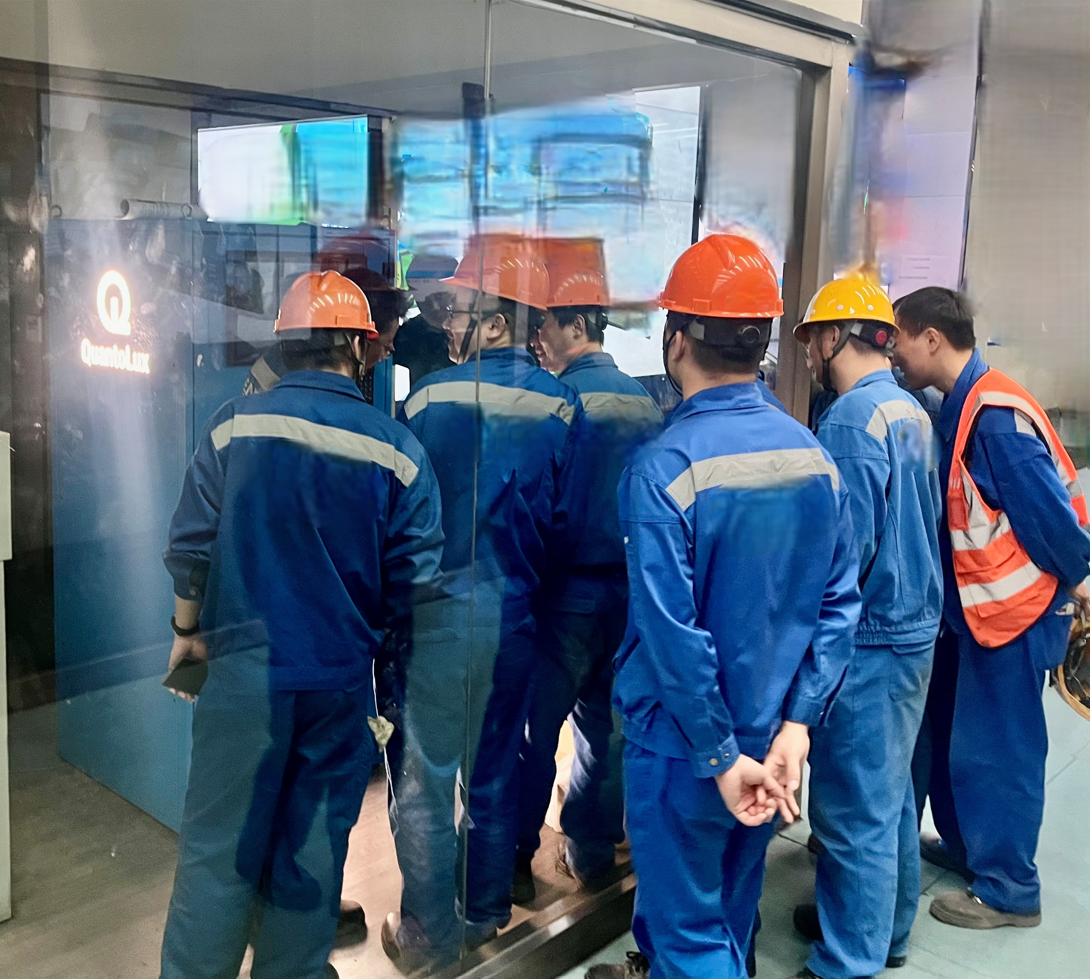
The two-day commissioning and training program involved seven shift engineers, all of whom quickly adapted to the system. One key takeaway: the simplicity of operation.
This simplicity ensures that operators can focus on results, not technology hurdles—accelerating adoption and long-term benefits.
From 15 Minutes to 1 Minute – Transforming Slag Control
Before the QLX9 installation, slag analysis in the plant typically took 10 to 15 minutes. With the new system, that time has been reduced to just 1 minute. This massive improvement in speed allows for near-real-time process adjustments, improving the precision of slag control. As a result, the plant expects to reduce or eliminate secondary and tertiary slagging steps—saving time, materials, and significant costs in the BOF process.
A New Era for Asian Steelmakers
This successful installation is more than a one-off success—it’s a signal of a growing trend. As steelmakers across Asia look for faster, more intelligent, and cost-effective tools to enhance furnace operations, the QLX9 is poised to play a central role.
Want to Learn More?
Interested in how rapid slag analysis can enhance EAF and LF steelmaking operations?
Check out our blog for more insights, or get in touch with our Quantolux experts to learn how the QLX9 can support your metallurgical goals.
Add-on Discussion:
Avoiding Tertiary Slagging Through Better Slag Control – Economic and Operational Impacts
In BOF steelmaking, the primary slag formed during the oxygen blow removes most of the impurities such as phosphorus, silicon, and manganese. However, to meet increasingly stringent steel quality requirements—particularly in terms of low sulfur content and inclusion cleanliness—secondary and tertiary slagging steps are often required.
These subsequent slag treatments serve specific purposes:
-
Secondary slagging is typically carried out during ladle operations to enhance desulfurization and inclusion removal, optimizing slag composition for refining in a lower oxygen environment.
-
Tertiary slagging is used for ultra-clean steels, involving additional synthetic slag additions and refining steps to achieve extremely low impurity levels and control non-metallic inclusions.
While necessary for certain steel grades, these steps add cost and complexity to steel production. Reducing their frequency or intensity through better primary and secondary slag control offers a clear path to improved efficiency.
1. Estimated Costs of Tertiary Slagging
Tertiary slagging includes several cost-intensive components:
-
Use of high-grade synthetic slags (e.g., CaO-Al₂O₃ systems, fluorspar, MgO-based materials)
-
Extra energy input in ladle furnaces or vacuum degassers
-
Prolonged treatment times, which limit furnace productivity
-
Accelerated wear of refractories and electrodes
-
Higher operational and labor-related costs
Typical cost range: $5 to $15 per ton of steel
2. Cost Impact for a 4 Million Ton per Year Plant
Assuming 10% of annual production (400,000 tons) undergoes tertiary slagging, with an average cost of $10/ton:
-
A 20% reduction in tertiary slagging (80,000 tons avoided) would yield:
Direct cost savings = 80,000 tons × $10/ton = $800,000 annually
3. Additional Operational Benefits
Avoiding tertiary slagging through better process control also generates broader operational advantages:
-
Increased steelshop throughput due to reduced ladle treatment times
-
Lower consumption of refractory materials and electrodes
-
Improved steel yield with reduced metal loss to slag
-
Reduced energy use and lower carbon emissions
-
Greater equipment availability and reduced maintenance requirements
Conclusion
Secondary and tertiary slagging are essential tools for producing high-quality steel, but they come with significant costs. For a plant producing 4 million tons of steel annually, avoiding even a portion of tertiary slagging through improved slag chemistry control and real-time process optimization can yield direct savings of $800,000 per year. When combined with indirect benefits in productivity, yield, and sustainability, the case for better slag control becomes both economically and operationally compelling.